
Blog
65% of Family Offices Still Run on Spreadsheets. AI Is the Operating System They Actually Need.
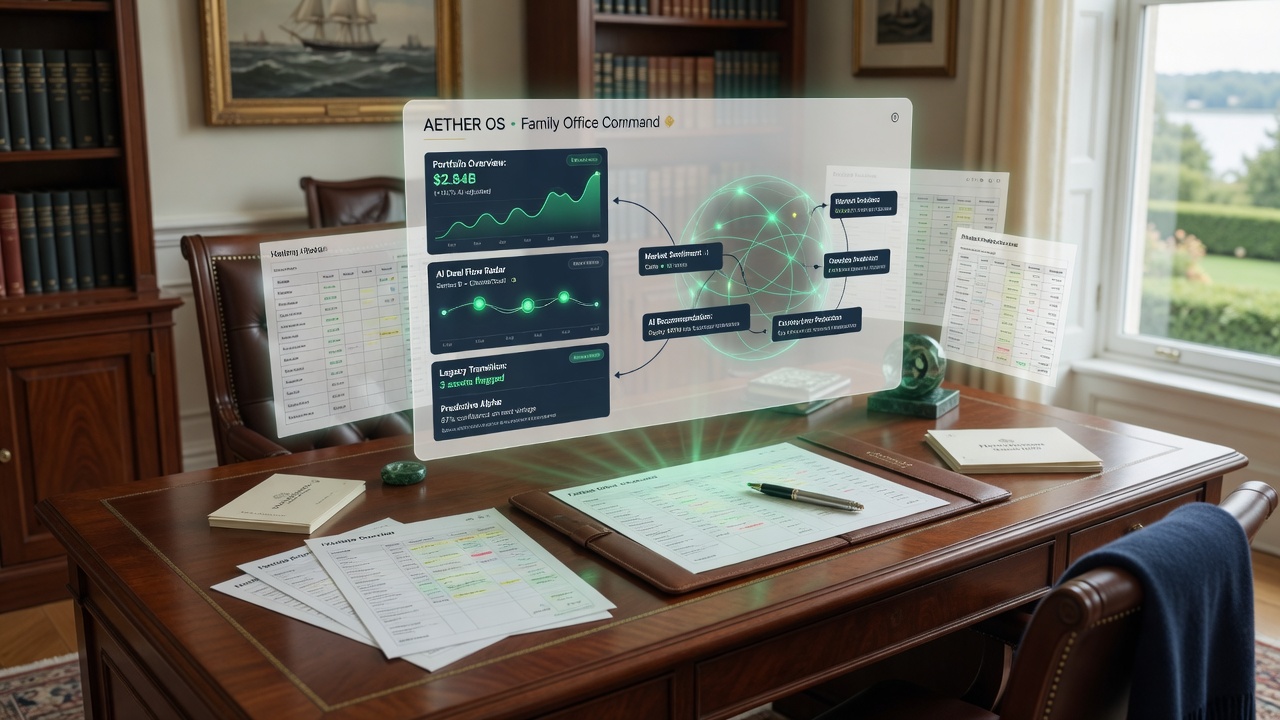
At Startup Miracle, we run a business on four continents with an AI staff of three agents. We are not a family office. But the problem we solve for ourselves is the same one that 65% of family offices still manage with spreadsheets: how do you centralize fragmented data, automate repetitive processing, and make institutional knowledge available to everyone who needs it?
Family offices are miniature enterprises. They manage multiple entities, asset classes, custodians, currencies, and generations of stakeholders. And according to the Aleta Family Office Technology Guide (April 2026), nearly two-thirds still run this complexity on spreadsheets.
That is not a technology problem. That is an operating system problem.
What Most Family Offices Are Missing
Most family offices have the right pieces: an accountant, a lawyer, a wealth advisor, maybe a Chief Investment Officer (CIO). What they lack is a centralized knowledge layer that connects those pieces.
A spreadsheet is a file. An AI Operating System (AI-OS) is a living knowledge base that:
- Learns your portfolio structure, entity relationships, and reporting preferences
- Automates K-1 ingestion, capital call tracking, and net asset value (NAV) statement processing
- Answers natural language questions across all asset classes in real time
- Monitors markets, surfaces anomalies, and generates investment committee briefs on demand
The difference is not incremental. It is structural.
The OS vs. the Toolbox
A family office can buy five best-in-class tools — a reporting platform, a CRM (Customer Relationship Management) system, a portfolio tracker, a document manager, and a BI (Business Intelligence) tool. Each tool is excellent at one thing. None of them talk to each other.
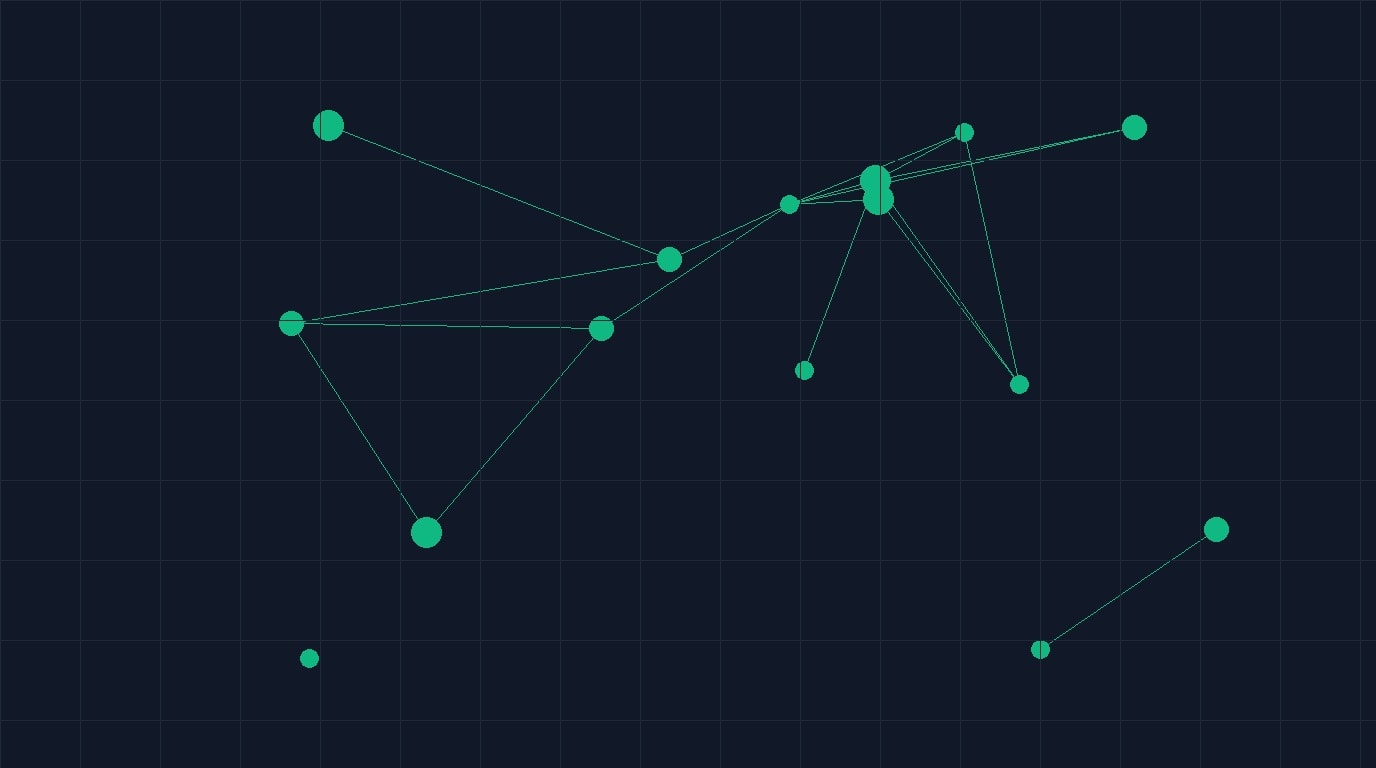
An AI-OS sits above those tools. It ingests data from every source — banks, custodians, private equity (PE) statements, real estate partnerships, tax software — and builds a single, queryable knowledge layer.
This is the same architecture we run at Startup Miracle. Granola captures meeting notes and decisions across the team. Claude and Codex process those notes into structured knowledge. Our Hermes agent executes scheduled workflows. Everything connects.
A family office running five disconnected tools is like a family office running five disconnected humans: each one works hard, but the organization has no shared memory.
What the AI-OS Actually Learns
A properly configured AI-OS for a family office tracks eight dimensions continuously:
Portfolio structure. Entity relationships, ownership percentages, asset allocation across public and private markets. When a new Limited Partner (LP) commitment comes in, the OS updates the capital call schedule automatically.
Cash flow projections. By integrating internal financial history with economic signals and scenario models, the OS forecasts cash needs across entities with a precision spreadsheets cannot match. PwC’s research shows family offices using AI for cash flow forecasting surface cross-portfolio insights that manual analysis misses entirely.
Private markets processing. K-1s, capital calls, NAV statements, fund reports. These documents arrive in different formats every quarter. The OS ingests them, extracts structured data, and reconciles against the portfolio model. What used to take 15–20 hours per month takes minutes.
Procedures and workflows. Who approves what. What triggers a rebalancing. How the investment committee reviews a new opportunity. The OS learns the workflow so it can route decisions and flag bottlenecks.
Pricing and fee tracking. Management fees, carried interest, custody fees, advisory fees. The OS surfaces fee drag across the portfolio and alerts when costs drift outside benchmarks.
Communication and reporting. Monthly reporting packs, quarterly investment reviews, annual board books. The OS generates all of them on demand, in the format each stakeholder prefers — detailed for the CIO, visual for the next generation, summarized for the trustee.
Risk and compliance. Concentration limits, currency exposure, jurisdiction changes. The OS monitors continuously and escalates when thresholds are breached.
Generational knowledge. This is the dimension most family offices underinvest in. Every decision, every rationale, every meeting captures institutional memory. PwC notes that with a few hours of guided training, team members can become proficient with AI tools — paying off in stronger culture, confidence, and collaboration. The same applies to the family itself.
The Architecture Behind It
You do not need a data science team to build this. The architecture is straightforward:
Layer 1: Data ingestion. Connect every source — bank statements, custodian feeds, PE fund portals, tax software, CRM, document management — through APIs or automated document processing.
Layer 2: Knowledge base. A structured database that maps every entity, relationship, asset, and workflow. This is the single source of truth that eliminates boardroom debates over which report is correct.
Layer 3: AI agents. Agents that query the knowledge base, generate reports, monitor markets, surface anomalies, and answer natural language questions. Each agent has a defined role: one handles reporting, another handles compliance monitoring, a third handles ad-hoc research.
Layer 4: Interface. Dashboards, alerts, natural language chat, automated email briefings. Each stakeholder interacts with the OS on their terms.
We use this exact four-layer architecture at Startup Miracle. Our AI operations team — Claude as strategist, Codex as builder, Hermes as executor, and Aitana as the always-on operations agent — runs on this stack. A family office version is the same model with different data sources.
Cost Comparison: OS vs. Headcount
A family office with portfolio complexity of $100M+ typically carries 3–5 full-time staff. At $100K–$200K per role, the annual cost runs $300K–$1M+.
An AI-OS, fully configured with data ingestion, knowledge base, and agent layer, costs roughly $1,500–$5,000 per month depending on complexity and number of entities. That is $18K–$60K per year.
The comparison is not about replacing people. It is about what you get for the extra $240K–$940K per year: reclaimed time, faster decisions, fewer errors, and institutional knowledge that does not walk out the door.
The Aleta guide makes this concrete: a single copy-paste error in a spreadsheet can create multi-million dollar discrepancies. That risk compounds with every new entity and every new private markets commitment.
Cost Predictability
AI pricing is shifting. Anthropic moved to usage-based billing on July 1, 2026, and models like Sonnet 4.6 now match Opus 4.6 on enterprise document reading at 60% lower cost. We track these changes because we run the same models daily.
The key to cost predictability is architecture. An AI-OS with smart routing — sending routine queries to lower-cost models and complex analysis to premium models — contains costs better than a flat-rate enterprise license that charges for everything at the same tier.
How It Learns Your Business
Setting up an AI-OS is not a six-month implementation. It follows a repeatable process:
Week 1: Discovery. Map the entity structure, asset classes, data sources, reporting cadence, and key stakeholders. Identify the highest-value automation targets — typically K-1 processing or cash flow forecasting.
Week 2: Data integration. Connect the top three data sources. Ingest historical statements. Build the initial entity relationship map.
Week 3: Agent configuration. Deploy the first agent — usually the reporting agent. Generate the first automated monthly pack. Get feedback.
Week 4: Expansion. Add the compliance monitor. Connect additional data sources. Train the OS on custom workflows.
Week 5+: Continuous refinement. The OS improves as it processes more data. Every corrected extraction, every flagged anomaly, every user question makes the system smarter.
We followed this exact timeline to build our own AI operations system. Week 3 had the first automated report running. Week 4 added the content pipeline. We have not looked back.
The Generational Succession Angle
This is where the OS changes the conversation for family offices.
Aleta’s guide describes a client meeting where both generations sat down together and saw their complete portfolio in one place for the first time. The next-generation member discovered investments the family had made over a decade ago. The value had doubled, and no one had tracked it.
That is not a technology story. That is a governance story. An AI-OS becomes the shared foundation of truth that bridges generational knowledge gaps. Next-gen members, who are digital natives, expect visual, mobile-first access. A static PDF or spreadsheet is a structural barrier to engagement.
When the knowledge lives in the OS instead of in one person’s head, succession planning becomes about capability, not about who holds the passwords to the Excel files.
Getting Started
If your family office manages more than $50M in assets across multiple entities, you already have a data fragmentation problem. You also have an opportunity.
The path is clear: consolidate the data layer first. Build the knowledge base second. Deploy AI agents third. The first report the OS generates automatically will change how you think about your own operations.
We built our system because we needed it. We are building the same architecture for family offices, professional service firms, and businesses that need to scale without adding headcount. It starts with understanding where your data is and where it needs to go.
That is not a prediction. That is our current setup.
Frequently Asked Questions (FAQ)
What is an AI Operating System for a family office?
An AI Operating System (AI-OS) is a centralized knowledge layer that ingests data from every source — banks, custodians, private equity funds, real estate partnerships, tax software — and builds a single, queryable intelligence layer. Unlike a reporting tool, it learns your entity structure, automates repetitive processing, monitors markets, and answers natural language questions across all asset classes.
How is an AI-OS different from a reporting platform?
A reporting platform generates reports from connected data. An AI-OS learns your business, automates workflows, monitors continuously, and improves over time. The difference is between a calculator and a financial analyst who never sleeps.
How secure is this for sensitive wealth data?
Yes, enterprise-grade. An AI-OS operates on your own infrastructure or a dedicated virtual private cloud (VPC) with encryption at rest and in transit. Access controls, audit logs, and role-based permissions are standard. PwC’s framework on responsible AI emphasizes privacy by design, monitored usage, and maintaining human oversight.
How long does implementation take?
The initial setup takes 3–4 weeks: discovery, data integration, agent configuration, and refinement. The first automated report typically runs at Week 3. Full deployment across all entities takes 6–8 weeks.
Can the OS handle multiple currencies and jurisdictions?
Yes. The knowledge base maps entities, currencies, and jurisdictions, enabling consolidated reporting across international structures. It handles foreign exchange (FX) adjustments and jurisdiction-specific compliance rules.
How do I start?
Schedule a conversation to discuss your current setup. We will map your entity structure, identify the highest-value automation targets, and show you what Week 1 looks like for your specific data environment.