
Blog
Law Firm Client Intake: From 3 Days to 15 Minutes with Conversational AI
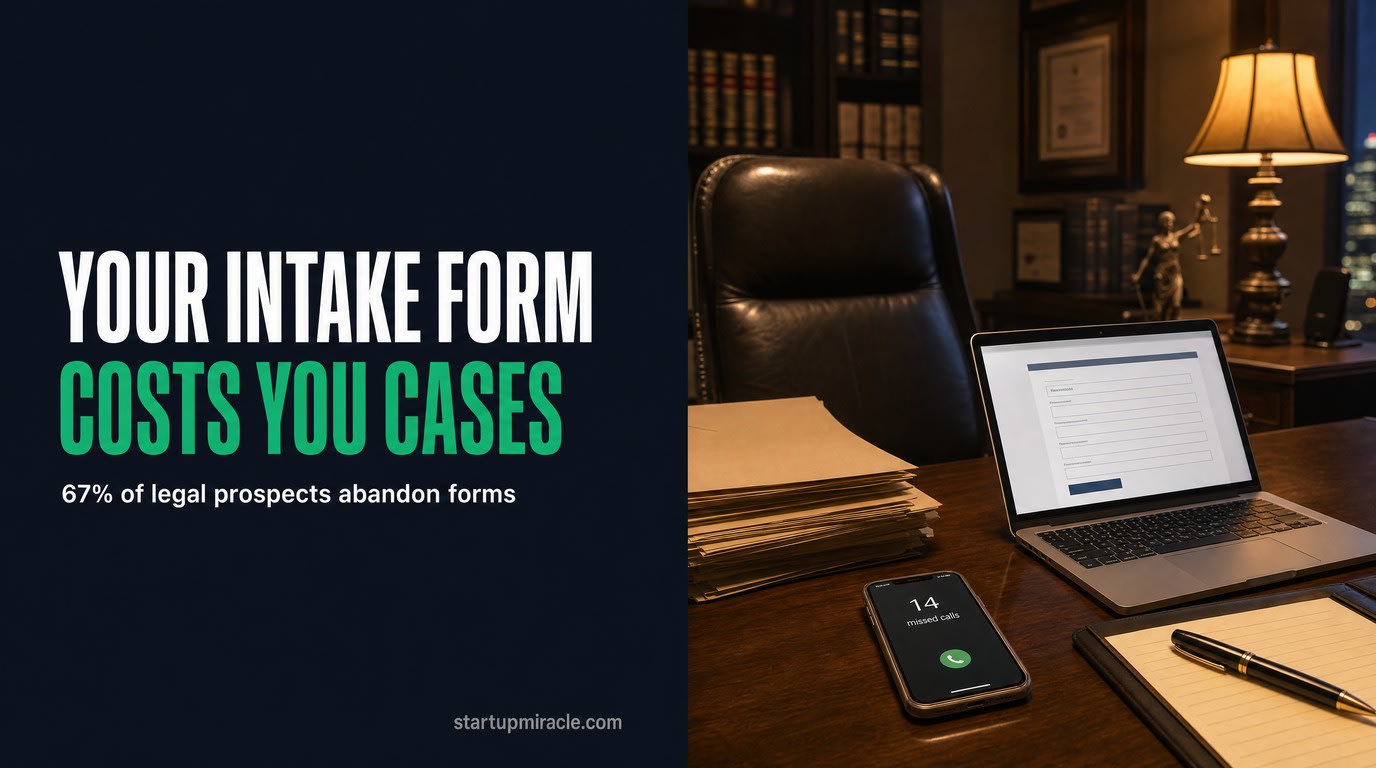
Every day, potential clients visit law firm websites ready to tell their story. They hit a wall of dropdown menus, checkboxes, and required fields.
67% of them leave without completing the form.
That's not a guess. That's the abandonment rate on standard legal intake forms, documented in Clio's 2023 Legal Trends Report. For a mid-size personal injury firm generating 500 leads a month, that's 335 potential clients walking away.
The firms that fix this don't just tweak their forms. They replace them entirely.
The Three-Day Silence
Most small and mid-sized law firms operate intake the same way: prospect fills a form, form lands in someone's inbox, someone calls back when they get to it.
The Hennessey Digital 2025 survey found that 26% of law firms never respond to online leads at all. Not "respond slowly." Never.
Of the ones that do respond:
- Median response time: 13 minutes — but that's a big improvement from 33 minutes in prior years
- 25% respond in under 5 minutes
- 56% respond within one hour
- 74% respond within seven days
Seven days.
Meanwhile, the legal consumer has already moved on. According to data from Martindale-Avvo, 79% of legal consumers who contacted multiple attorneys hired the most responsive one.
The most responsive one. Not the best one. Not the cheapest one. The one who answered first.
The $109 Billion Leak
This isn't a small problem. The Law Leaders study estimates $109 billion in annual revenue is lost across the legal industry from missed calls alone. Consider:
- 35% of calls to small and mid-sized law firms go unanswered during business hours
- 85% of callers who reach voicemail never leave a message
- 48% of law firms are essentially unreachable by phone
- Firms miss approximately 36% of all incoming calls, and 34% of those callers never try again
The economics get worse. Hyperleap's 2026 analysis shows that if your firm generates 100 leads per month at $111 cost per lead (the industry average for general legal services) and converts at 14% (industry average), you spend $793 per client. Improve conversion to 30% with better intake, and the cost drops to $370 per client — a 53% reduction with zero additional marketing spend.
You don't need more leads. You need to stop dropping the ones you already have.
What Most Firms Get Wrong
Law firm intake software has historically optimized for the firm's convenience (structured data for the Customer Relationship Management (CRM) system) rather than the client's experience (being heard).
Forms capture data points. Conversations capture stories.
A prospect filling a personal injury form selects "car accident" from a dropdown. A prospect in a conversational interview reveals: "I was rear-ended at a stoplight by a texting commercial truck driver. I have dashcam footage, two witnesses, and the ER discharged me three hours ago."
Same checkbox option in a form. Radically different case value.
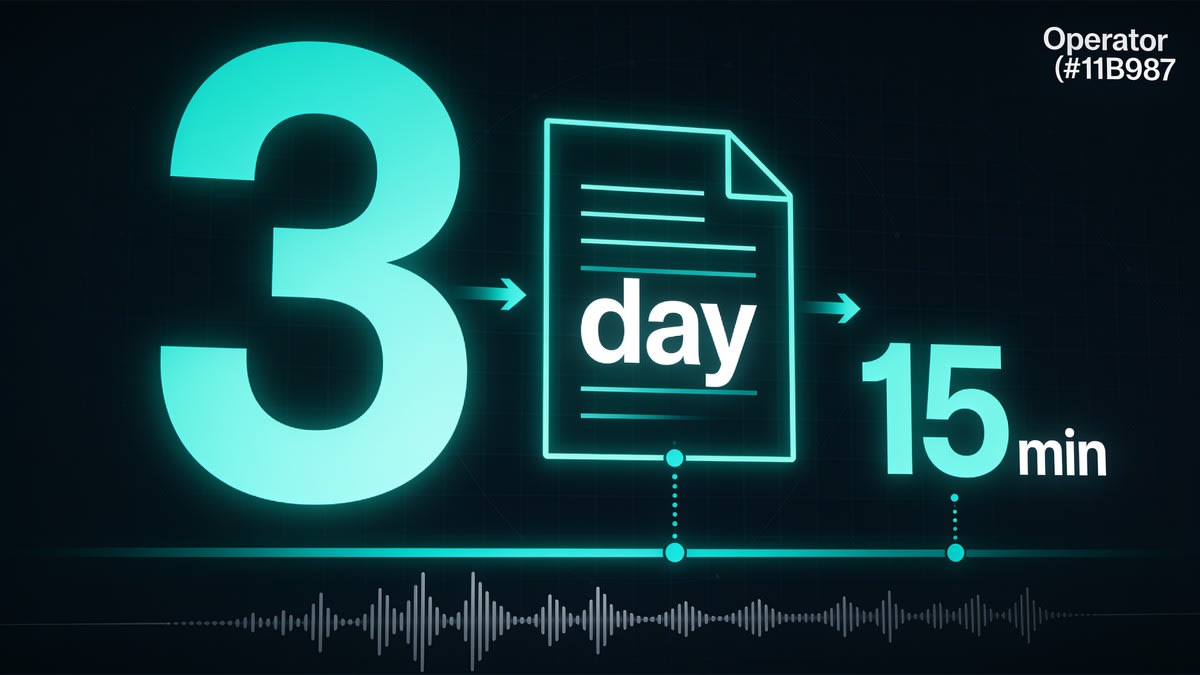
Perspective AI's research found that conversational AI delivers 3 to 5 times more qualifying information per lead interaction than traditional forms. The reason is simple: dialogue naturally surfaces context, nuance, and follow-on details that people simply do not volunteer in form fields.
What Conversational AI Actually Looks Like
Most "AI legal intake" products on the market are form-builders with automation bolted on. They generate automated follow-up emails, lead scores, and workflow triggers — but the client experience is identical to a form. Fill fields, click submit, wait.
Real conversational AI conducts an interview.
Here's what it looks like for a personal injury intake at 11 PM:
- Prospect visits the firm's website after a slip-and-fall at a grocery store
- A 5-to-7-minute conversation happens — not a form, a dialogue
- The AI asks open-ended questions, follows up dynamically, and adapts based on what it learns
- By the end, it has captured: incident occurred 3 days ago, ER visit with records, two witnesses (store employee and customer), photos of wet floor with no signage, manager said "this happens all the time"
- A structured case summary lands in the attorney's inbox with strength signals: documented injuries, multiple witnesses, photographic evidence, potential prior incidents
The attorney wakes up to a fully qualified case summary instead of a form submission that needs another 20 minutes of phone tag to fill in the gaps.
The Numbers That Matter
The shift to conversational AI is producing measurable results:
- Completion rates: conversational AI intake achieves 75-85% completion vs. ~33% for standard forms (Perspective AI)
- Lead-to-consultation conversion: firms switching from forms to conversation report significant increases
- Response time compression: intake that took days now takes minutes
- 24/7 operation: no staffing required for after-hours intake
CaseGen.ai reports that responding within 5 minutes makes firms 20 times more likely to qualify a lead, drawing on Harvard Business Review research on speed-to-lead. After 10 minutes, conversion drops sharply. After one hour, meaningful engagement becomes unlikely.
Javier's Take
I run Startup Miracle. We build AI systems for businesses that can't afford to miss a single lead. Law firms are some of the most consistent offenders when it comes to slow intake, and it's not because they don't care. It's because intake is administrative work that happens between real legal work.
The firms that fix this don't hire more intake staff. They deploy a conversational AI layer that handles the first engagement — the qualification, the story-gathering, the scheduling — and hands the attorney a prepared case file.
We've been doing this internally with our Merchant Response Stack. Voice AI, SMS, WhatsApp, email, all connected through a single workflow that captures, qualifies, and routes leads in real time. The same architecture works for law firms.
The data is clear: 79% of legal professionals now use AI, per the ABA's 2024 survey. That's up from 19% in 2023. The question is no longer whether to adopt AI intake. It's whether your firm will be the one responding in 15 minutes or the one still waiting 3 days.
The Path Forward
Implementing conversational AI intake doesn't require a technical overhaul:
- Audit your current intake — measure actual response time per channel (web form, phone, email). Most firms don't track this.
- Deploy a conversational layer — voice AI for inbound calls, conversational chat for web forms, automated SMS follow-up for abandoned interactions.
- Connect to your Customer Relationship Management (CRM) — qualified leads land directly in your existing workflow.
- Measure the delta — track lead-to-consultation conversion before and after. The improvement is usually visible within the first 30 days.
FAQ
How long does it take to implement conversational AI intake for a law firm?
Most deployments are operational within 1 to 2 weeks. The setup involves configuring the conversational flow for your practice area, connecting it to your phone system and website, and integrating with your sales operations stack.
Does conversational AI replace the need for intake staff?
No. It replaces the friction of forms and the delay of manual response. Staff still handle the final qualification, the consultation booking, and the client relationship. The AI handles the first contact, the data gathering, and the routing.
Is conversational AI compliant for sensitive legal cases?
It depends on the provider. Startup Miracle's stack deploys HIPAA-compliant voice and SMS agents. If your firm handles personal injury or medical malpractice cases, compliance with legal standards is a requirement — not an option.
What practice areas benefit most from conversational intake?
Personal injury leads the way because case story matters more than checkbox data. Family law benefits from the emotional sensitivity of conversation vs. cold forms. Immigration law gains from the complexity of situation-mapping that forms can't capture. Any practice area where the client's story determines case value benefits significantly.
Book an AI Assessment
You're losing cases while prospects fill out forms that don't capture their story. We'll audit your current intake workflow, measure your actual response time, and deploy conversational AI that qualifies leads in 15 minutes — not 3 days.