
Blog
Square and OpenTable Now Share One Guest File
Square and OpenTable Now Share One Guest File
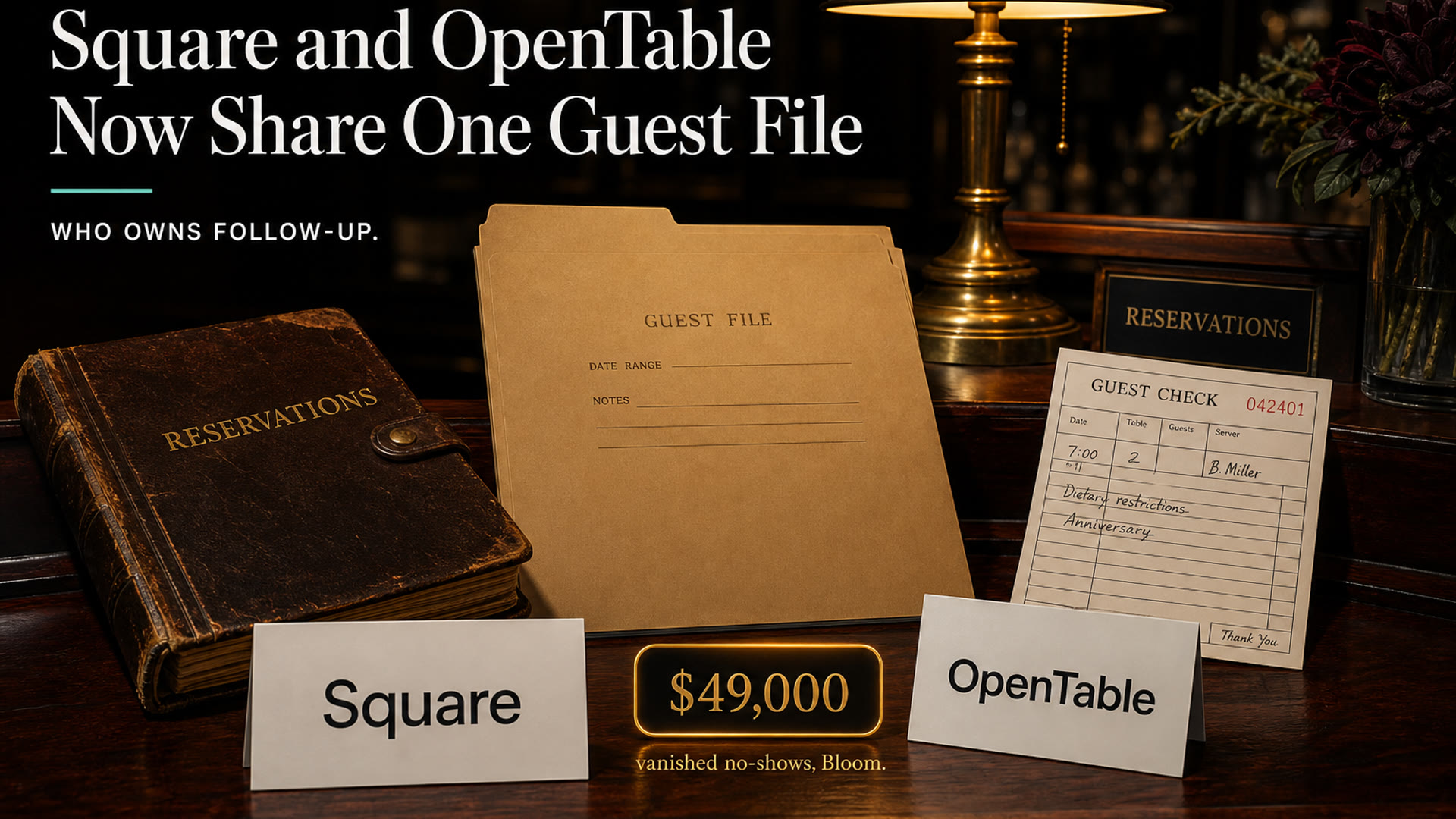
On August 18, 2026, Square expanded its preferred partnership with OpenTable so the reservation book and the check share one guest profile. Reservation history, dining preferences, and transaction data now sit together. Square calls that a unified guest profile, meaning the host can see who booked, what they last ordered, and what they spent without exporting one system into the other. If you already run the floor on Square hardware and take covers on OpenTable, that is real help in software you already pay for.
Square and OpenTable built something worth turning on. The question is not whether the merge works. It is who owns guest follow-up, the named person or job that writes the regular, the hold, and the win-back after the seat fills. That job has to be named before the point of sale, meaning the register that takes the check, starts running the room from that file. A stop rule, meaning the named line the assistant may not cross without you, has to be written before the first profile syncs, not after a regular walks in and the floor cannot name them.
Startup Miracle sits with restaurant, banquet, and dinner-show owners who already pay for Square and OpenTable and still stitch the book to the check by hand. We help you name the guest job the shop keeps, and write that stop rule, so the POS does not become the only memory in the room.
One profile from the book to the check
Square's August 18 release is an expansion of a point-of-sale partnership that started in 2022. OpenTable already knew the booking: when they come, what they like, whether they are celebrating. Square already knew the spend: the order, the ticket, the card, the repeat visit. The new work is putting those two views in one place on Square software and hardware, including Square Handheld.
James Schonzeit, Square's head of food and beverage, said operators should not have to stitch reservations, payments, and guest data themselves. Robin Chiang, OpenTable's chief growth officer, said the tech should run behind the scenes. Both are right about the stitch. The owner still names which guest job the shop keeps once it is gone.
OpenTable, on that same Square page, says it serves more than 70,000 restaurants worldwide and fills 2 billion seats a year. Those are OpenTable claims, not a Startup Miracle count. Treat them as the scale of the book, not as a promise that your Tuesday four-top will sit. The partnership is live in the United States, Canada, the United Kingdom, Australia, Ireland, and France, and you opt in.
A first AI hire, meaning the first named job you let software run without you standing over it, can live inside this merge. It can be the confirmation that goes out when the booking lands. It can be the reminder the day before. It can be the note that a regular is back. It cannot be "the POS now owns the room." That is a login, not a job.
Labor at 33 cents on the dollar
The National Restaurant Association, on July 22, 2026, put the cost of the room in three numbers an owner already feels. Food takes about 33 cents of every sales dollar. Labor takes about 33 cents of every sales dollar. Average hourly restaurant wages are up 41 percent since February 2020. Wholesale food prices are up 35 percent over the same span. A third of operators, 33 percent, said the shop was not profitable in the first half of 2026.
Those figures are Association research, not a pitch deck. They are why a merge that saves an hour of stitching is worth turning on, and why it is expensive to let the file run without a named follow-up. If labor is already 33 cents, the hour you spend exporting OpenTable into a spreadsheet after close is payroll you already paid, spent on a stitch the vendors just offered to drop.
A restaurant owner who is still the only guest memory in the building feels this first. When a regular walks in and the floor cannot name them, the ticket can still be fine and the room still looks sloppy. That is not a software problem. It is a job that was never named, sitting next to a file that now knows the spend.
What Bloom counted on empty tables
A banquet or private-dining GM still walks the hold list, the parties booked or penciled that have not sat yet. When the book and the check share a file, that walk can get shorter. It can also get sloppy if nobody owns the hold and the win-back.
Bloom Intelligence, on August 6, 2026, read 641,036 advance reservations across about 50 full-service locations in its own network, from January 1, 2025 to August 6, 2026. Bloom says 3.7 percent no-showed, 23,792 parties, and 15 percent cancelled, so 18.7 percent of booked tables never seated a guest. Bloom puts the average seated check at about $165 and vanished no-show bookings at about $49,000 per location per year.
Those dollars are Bloom network math on roughly 50 locations. They are not a census, and they are not a Startup Miracle audit. Do not take $49,000 as your number. Take the shape: a booked table that never sits is labor you already scheduled against a seat that expired. Bloom is careful to say its network skews full-service and multi-location, and that individual shops will see different rates.
The merge does not fix a no-show by itself. It gives the host one place to see who booked and what they last spent, which is the start of a reminder, a hold convert, or a win-back. Someone still has to name that job. If the file knows the spend and nobody writes the guest, you have a prettier empty table.
The room that still greets from memory
A dinner-show owner who still greets from memory is running the same stitch with a sold night on the line. Square's August 18 note says the room can now see who is celebrating and what they last ordered, because the booking is tied to the spend. That is useful on a night when the house is full and you cannot afford to treat a regular like a walk-in.
It is also how a login dies in 30 days. The file is there. Nobody owns the guest-memory job, the named work of writing who came, what they marked as a celebration, and who gets the next note. The owner keeps greeting from memory because memory is still faster than a profile nobody updates. Then the regular is in the file and not on the floor, and the sold night looks careless.
OpenTable's 70,000 restaurants and 2 billion seats, again OpenTable's claim, describe a book that already scales. Your room needs one named job that uses the file before the curtain, not a second spreadsheet after the last check. Food at 33 cents and labor at 33 cents leave a thin slice. A guest file that sits unused is more software on a shop where a third of operators already lost money this year. A guest file with a named follow-up is time back from a stitch you no longer have to run by hand.
After the cover is sat
Turn the share on. Then write three names on a card before the next service.
First, who writes the regular. That person, or that job, updates the profile when the guest leaves, not when you remember on Sunday. Second, who works the hold list. That person converts a penciled party or releases the table in time to reseat it. Third, who owns the win-back. That person writes the guest who booked and did not sit, using the spend the file now shows, not a guess from the book alone.
The stop rule sits next to those three names. Write the line the file may not cross: no win-back to a guest who asked not to be mailed, no auto-comp from the profile, no hold released without the GM, no celebration campaign you have not seen. The merge can power loyalty and marketing. That is Square's language. It should not send the first note without a human on the other side of the rule.
Startup Miracle's work here is the AI Readiness pass, not another reservation product. The quiz names which guest job the shop keeps now that who booked and what they spent live in one file. The $1,500 assessment, with a $1,000 credit if you continue, is the longer version of that same question. We do not replace Square or OpenTable. We sit with you until the follow-up has a name, and the stop rule is on the card, before the POS runs the room.
If you have not opted in yet, write the card first, then turn the share on. A complete guest file with no owner is how a useful merge becomes another tab.
FAQ
What is a Square and OpenTable guest file?
A guest file is one profile that holds the reservation and the check. Square and OpenTable now share that view, so the host can see who booked and what they spent without stitching two exports.
How do I keep guest follow-up after the merge?
Name the job before you opt in: who writes the regular, who works the hold list, and who owns the win-back. Write the stop rule in the same sitting, so the point of sale cannot send a note or release a hold without you.
How much does an empty reserved table cost?
Bloom Intelligence, reading 641,036 advance reservations across about 50 locations, puts vanished no-show bookings at about $49,000 per location per year on a $165 average seated check. That is Bloom network math, not a census, and not a Startup Miracle audit.
Write the names before the next service. Square and OpenTable already did the stitch.
If you want the long version of how we think about readiness, Start with a FREE quiz and Get Your AI Score.