
Blog
Your Roofing Company Is Missing 62% of Calls During Storm Season. Each One Is Worth $13,600.
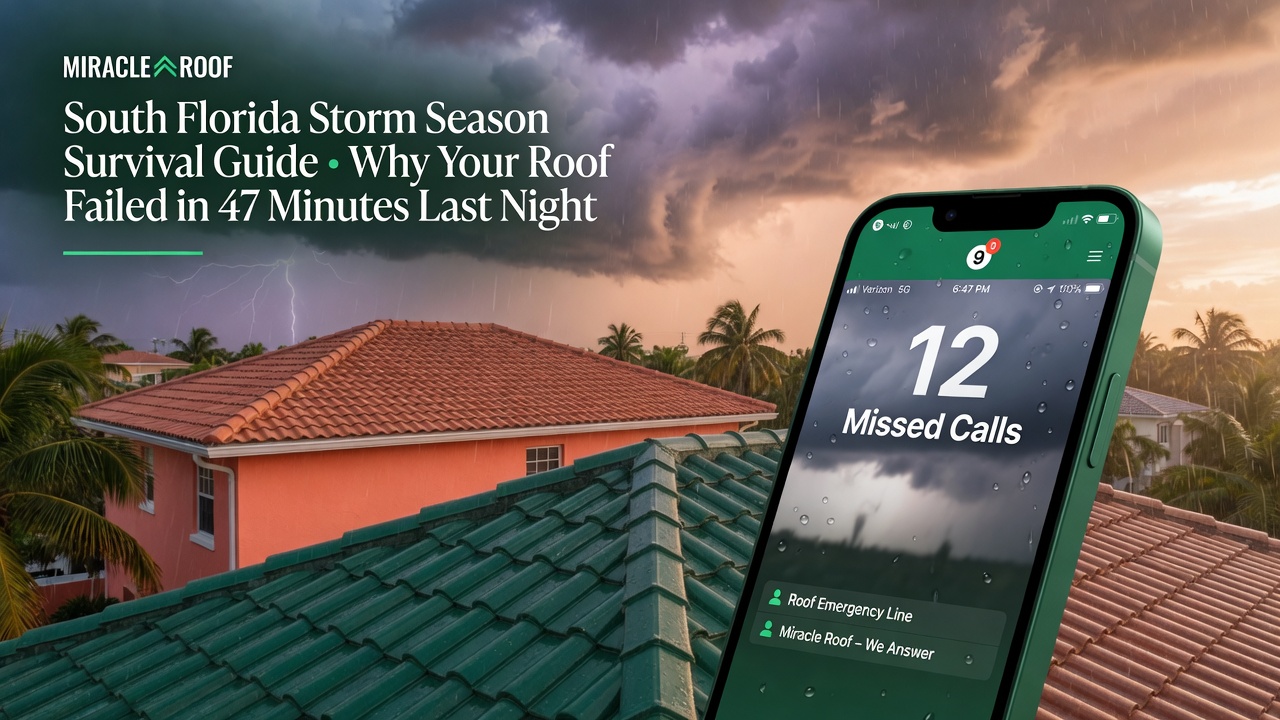
It's 7 PM on a Tuesday in July. A storm just rolled through Pembroke Pines. A homeowner finds a leak in their living room ceiling. They grab their phone and call the first roofing contractor they find on Google.
No one answers. They call the next one. Same thing.
By the time that contractor returns the call the next morning, the homeowner has already scheduled an inspection with someone else. The first responder won the job. The rest lost it.
This scene plays out hundreds of times a day across South Florida during storm season. And the data says it costs roofing contractors more than most realize.
Let's look at the numbers.
The Storm Season Math
The National Roofing Contractors Association (NRCA) estimates that roofing contractors miss 62% of incoming calls during peak business hours , 9 AM to 4 PM, when crews are on roofs and office staff is stretched thin.
After a storm, that volume spikes. Storm events increase call volume by 300-500% in the 48-72 hours after weather passes. Some contractors see 10x normal volume. And the first contractor to respond wins 85% of storm damage jobs.
The average roofing job in Florida is worth $13,608 (median), with top-quartile contractors landing jobs of **$45,679+**.
Here's the simple math:
If your roofing company handles 50 calls per week during storm season and misses 62% of them, that's 31 missed calls. 85% of callers who can't reach a business won't call back. That's 26 leads that walk to a competitor.
At a 20% close rate on leads that actually reach you, those 26 missed contacts represent roughly 5 lost jobs. At $13,608 per job, that's $68,040 in lost revenue per week during peak storm surges.
The conservative estimate across the full season puts the monthly number at **$21,000+ in lost revenue** from unanswered calls alone.
What Most Roofing Contractors Do Wrong
The standard response to missed calls is "call them back in the morning." But that strategy fails for three reasons.
1. Storm leads are urgency-driven. A homeowner with a leaking roof doesn't wait until tomorrow. They call until someone answers. The first person who picks up gets the inspection. The inspection converts to a quote. The quote converts to a job.
2. After-hours calls are not optional. 35% of all roofing lead volume comes outside regular business hours , evenings, weekends, and holidays. That's more than a third of your potential revenue arriving when no one is in the office.
3. Voicemail is not a safety net. The data is clear: 85% of callers who reach voicemail will not leave a message. They hang up and call the next name on Google.
Most roofing contractors spend thousands of dollars on Google Ads, Search Engine Optimization (SEO), and yard signs to drive phone calls. Then they let 62% of those calls go unanswered. It's like paying for a fishing license and leaving the rod on the dock.
The Speed-to-Lead Problem
Speed-to-lead , the time between a prospect reaching out and your response , is the single most underinvested metric in the roofing industry.
Responding to a lead within 5 minutes increases your close rate by 391% compared to a 30-minute response. For urgent roofing needs (storm damage, active leaks, insurance deadlines), the effect is even stronger.
But here's the reality: most roofing contractors operate with a 2-3 person office staff. When a storm hits, the phones ring non-stop. The crew is on roofs. The office is overwhelmed. And every call that goes to voicemail is a lead that's gone forever.
This isn't a staffing problem. It's a response system problem.
What We See at Startup Miracle
We build response systems for contractors across South Florida. We've seen this pattern across roofing, HVAC, and construction businesses.
The contractors who fix this gap don't add more staff. They add a layer of intelligent triage between the ringing phone and their team. The fix is not "hire a night shift receptionist." It's "answer every call, every time, without adding headcount."
The numbers are hard to ignore. A roofing contractor using voice AI to capture missed calls went from 64 missed calls per month to 2 , capturing 62 conversations that would have been lost. Those conversations produced 8 additional quotes and 2 closed projects, generating $36,000/month in additional revenue at a cost of $199/month. That's a 180X return on investment (ROI).
We see this same pattern across HVAC contractors during summer peak and car dealerships losing after-hours leads. The math is consistent across every vertical. The businesses that answer win. The ones that don't lose.
How to Fix It
The fix is structural, not tactical. You don't need to answer every call yourself. You need a system that answers every call, qualifies the lead, and routes the right information to your sales team.
Here's what a working response system looks like for a roofing contractor during storm season:
- Every call is answered on the first ring. No voicemail. No busy signal. No "call back during business hours."
- The caller is qualified immediately. Is this an emergency leak? A storm damage inspection request? An insurance claim question? The system captures the context in real time.
- The information reaches your team instantly. Name, address, issue, urgency level , sent to your phone as a text message or logged in your Customer Relationship Management (CRM) system.
- Your team calls back when they can. But now they're calling back a qualified lead, not a voicemail that may or may not return.
The goal is not to replace your office staff. It's to make sure that when a storm hits and your phones ring 10x normal volume, every single caller gets answered and every single lead gets captured.
The Bottom Line
Storm season in South Florida runs from June through November. Every year, the same pattern repeats: storms roll through, phones ring off the hook, and the contractors who answer win the work.
The ones who don't , who let 62% of calls go to voicemail, who return messages the next morning to find the lead already booked with someone else , they don't have a lead generation problem. They have a lead response problem.
And in a market where the first responder wins 85% of storm damage jobs, speed is everything.
We publish daily on how contractors can build better response systems. If your roofing company is losing leads because you can't answer the phone during storm surges, that's a fixable problem.
Frequently Asked Questions
How many calls do roofing contractors typically miss?
According to the National Roofing Contractors Association (NRCA), roofing contractors miss an average of 62% of calls during peak business hours (9 AM to 4 PM). After a storm event, when call volume spikes 300-500%, the miss rate can be even higher.
What is the average value of a roofing job in Florida?
The median roofing job value in Florida is **$13,608**, with top-quartile contractors landing jobs worth $45,679+. Each missed call during storm season could represent a five-figure revenue opportunity.
How quickly should a roofing contractor respond to a lead?
Responding to a lead within 5 minutes increases close rates by 391% compared to a 30-minute response. For storm-related roofing emergencies, the speed advantage is even more critical , the first contractor to respond wins 85% of storm damage jobs.
What percentage of roofing calls come after hours?
35% of all roofing lead volume arrives outside regular business hours , evenings, weekends, and holidays. Without a 24/7 response system, more than a third of your potential revenue is unreachable when no one is in the office.
Can AI really handle roofing calls professionally?
Yes. Modern voice AI systems can answer calls, qualify leads, capture details (address, issue type, urgency), and send the information to your team within seconds. A roofing contractor using voice AI went from 64 missed calls per month to 2, generating $36,000/month in additional revenue at a cost of $199/month , a 180X return on investment.